Letter No. 30 · Thursday, the eighth of October · A fifteen minute read
Play It Out
A letter on the dead hand, and how to lose like a master
My Fellow Table Guests,
There is a moment in nearly every game that no one talks about, and Prim thinks it is time somebody did. Not the moment of Mahjong, when the tiles come down and the table sighs. The other one. The quiet one, four or five turns in, when a woman looks at her rack, then at the exposures around her, then back at her rack, and understands, with perfect clarity, that this hand is gone. It will not come. The tile she needs went by twice while she was hoping, and the hand she was building died somewhere back around the third round, and she is the only one who has fully admitted it yet.
What happens in the next few minutes is, Prim would argue, the most revealing thing you will ever see a person do at a table. Because the hand is decided. That part is over. What is not over is the woman, and everyone is about to learn a great deal about her. Some sink. Some sulk. Some go a little reckless and start flinging tiles as though the game owes them an apology. And a rare few sit up a touch straighter, take a breath, and begin, quietly, to play beautifully losing mahjong, which is a harder and finer thing than most people ever bother to learn.
Prim would like to teach it to you this week, because here is the truth the winners already know. Every champion has misread the wall. Every one of them has held the wrong tile too long and watched her hand die in front of witnesses. The trophy does not go to the woman who never loses a hand. It goes to the woman who loses one gracefully, gives the table nothing, and comes back next hand with her composure entirely intact. So let us talk about the hand that is already gone, and the player you become while you finish it.
~Prim

The Draw
What the table remembers, and what it forgets
There is a scene that plays out in the groups every few weeks, and it always breaks Prim’s heart a little. A player posts, still stinging, about a hand that ended on her discard. The winner had nothing exposed at all. She was playing a concealed hand, so there was no rack to read and no warning to heed, and the tile looked as safe as any tile can look. Down it went, up went the call for Mahjong, and before the winner had even turned her rack around, the woman beside our poster sighed and asked, loud enough for the whole table, why on earth she would throw that. The comments divide instantly. Half say the question was fair, that a good player is expected to answer for her discards. The other half say it was unkind, that among friends you do not do that, and that a game is supposed to be fun.
Prim adores this argument, because both sides are describing the same few seconds and cannot agree on what they saw. And she would like to gently take a position, because Prim always takes a position. The discard was not the error. Against a concealed hand nobody at that table could have known, and the game already has a fair and tidy answer for the woman who throws the winning tile. She pays double. That is the entire price, printed in the rules, and she settles it without a word. Nobody is owed a sigh on top of it. The groan was the only misstep at that table, and it did not belong to the woman who threw the tile.
Here is what the table actually remembers, long after the hand is forgotten. It does not remember who lost. It never does. It remembers who lost well, and who lost badly, and it files those two facts away and quietly adjusts how it feels about you forever. The woman who sighs and blames and narrates her bad luck teaches the table something about herself every single time. So does the woman who simply says well played, and means it, and reaches for the tiles to wall the next one. One of them is invited back with warmth. Both of them lost the exact same hand.
Crak the Card
The dead hand still has a job
So your hand is gone. Prim is sorry, she truly is, but she is also going to tell you the good news, which is that you are not finished. You have simply been reassigned. The dead hand is not a hand with nothing left to do. It is a hand with a completely different job, and playing that job well is one of the real skills of the game, far rarer than the skill of building a winner.
This surprises newer players, so Prim will say it plainly. When you realize your hand cannot win, you may not declare your own hand dead and set it down. That call belongs to the other players, who may name a hand dead only from what they can see, an impossible exposure or a wrong tile count. Your private certainty that you have lost is yours alone to carry. You keep drawing, you keep discarding, you stay in the game to the end or until someone calls you out of it. Folding is not a courtesy on offer. So the only question left is not whether to play, but how, and the answer is the whole of this section.
The instant your hand turns defensive, your rack stops being a construction project and becomes a supply of safe throws, and not all tiles are equally safe. The safest tile in your hand is the one already lying dead in the discards, because a tile that has gone by, uncalled, cannot be claimed again once it is buried, and a copy of it in your hand is very unlikely to be the tile anyone is waiting on. Tom Sloper, whose strategy pages have taught this for years, gives a tidy rule of thumb for reading the neighbors of a fresh discard, that a tile a step or two off a just thrown tile is often survivable, and he adds the sterner half of it too, that you should not throw a tile whose twins you cannot find in the discards, because the danger of a live tile only grows as the wall runs down. Hold your live tiles. Feed the table your dead ones.
There is exactly one rule in defensive play that Prim will call close to absolute. Never, ever discard into a third exposure. When a player has three groups showing in front of her, she is possibly one call away from Mahjong, and the tile that completes her is the most expensive tile on the table. If the only safe throw you have left is a tile you would rather keep, keep the game instead and let the tile go. Sloper puts it about as bluntly as it can be put, that you should never discard to a third exposure even if it means breaking up a good hand. Your good hand is already dead. It has no feelings left to hurt. Break it cheerfully and throw the safe tile.
Prim will leave you with the single cleverest line she found while building this letter, because it draws the border of the whole subject in eight words. You have reached the endgame, Sloper writes, when you are worrying more about your discards than your draws. That is the moment the hand quietly changes jobs, whether or not you have noticed. The good player notices. She feels the game tip from hope to arithmetic, she puts her ambitions down without drama, and she starts counting what is left in the wall and what is still hidden, so that nothing leaves her hand that could hand somebody else the win. She is not playing to lose. She is playing so that if she must lose, she loses to a better hand and never to her own carelessness. And if you would like to make that last stretch second nature, Prim keeps the Endgame and Advanced Play workbook beside her own card, sixty four drills on counting the wall, reading your wait, and knowing the gracious moment to call it.
The Table Is Asking
Is it rude to keep playing a hand you cannot win?
The question came from a woman who had clearly been chewing on it for a while, and Prim was glad she asked it, because it is asked far less often than it is felt.
“My hand was dead and I knew it, but I kept drawing and throwing my safe tiles so I would not feed the woman with three exposures. Afterward I felt like a spoiler. Is it rude to keep playing a hand you already know cannot win?”
Prim will answer this one with her whole chest, because the answer is not only no, it is the reverse of the question. It is not rude to keep playing a dead hand. It would be rude to stop. You may not fold, first of all, so the choice you are agonizing over is not really yours to make. But set the rule aside and it is still the right thing, because the moment you decide your loss means the hand no longer matters, you have stopped taking your tablemates seriously. Playing your dead hand out with care is how you tell the other three that their win, if they get it, will be a real win, earned against a full table, and not a gift you handed over because you had lost interest.
The word spoiler is the thing to lay down here, because it is carrying a guilt it did not earn. Playing defense is not spoiling. The people who teach this game for a living say so without hedging. When you cannot win, the guidance from I Love Mahj runs, you switch to full defensive mode and do everything you can to keep anyone else from winning, and that, they add in as many words, is in no way unethical. It is simply the second half of the game, the half nobody puts on the box. You spent the first half trying to build. You spend the second half making sure the win, whoever gets it, is honestly come by. There is nothing to apologize for in either half.
So carry it to your own table this week, in good humor, and settle it before anyone needs it settled. Where do you stand? Would you take a quiet, careful, dead handed defense as a compliment and not a cold shoulder? Will you say well played and mean it, from either side of the win? And because a table never runs out of questions, this week Prim also settled whether the White Dragon is really a zero, what a pung, a kong and a quint each are and what the courtesy pass is, and who sets its size.
Who’s Talking
Three friends who talk the whole game through
In a letter about the parts of the game nobody puts on the box, Prim wanted to feature people who are willing to talk about all of it, the winning and the losing and the strange middle where most of a real game actually lives. She found them in her own earphones, on a young podcast called Tile Talk.
It is the work of three friends, Elizabeth, Christina and Marshall, who started the show this year and have kept at it steadily since, better than a dozen episodes deep and gathering a warm little following as they go. What Prim likes about it, and the reason it belongs in this particular letter, is the range of what they are willing to sit down and discuss. In one episode they take up the delicate business of playing for money, which is exactly the sort of thing that turns a friendly table tense if nobody talks about it out loud. In another they hand the microphone to a teacher on the mental health side of the game, the calm and the company of it. In another still they ask, plainly, how you are even supposed to know how good a player you are, which is a braver question than it sounds, because the honest answer usually involves counting your losses as carefully as your wins.
That, to Prim, is the whole spirit of the thing. A great deal of mahjong talk online is about triumph, the big hand, the lucky draw, the photograph of the winning rack. Rather less of it is about the ordinary humbling that is most of the game for most of us. A show made by three friends who will happily spend half an hour on the awkward, the humbling and the unglamorous is doing a small service for the community, because it makes the hard parts speakable, and a thing you can talk about at a table is a thing you can be gracious about.
Prim has her own show, as you well know, and she is not in the least worried about pointing you toward another. The table is big and the game is generous, and a rising tide floats every rack in the harbor. Go and give them a listen. You can find Tile Talk wherever you keep your podcasts.
Tile Envy
What keeps you civil in hour three
Prim is going to do something a little unusual in Tile Envy this week. She is going to covet things you cannot photograph. Because a letter about composure would be incomplete if it pretended composure was purely a matter of character, when a good deal of it, in Prim’s long experience, is a matter of your chair.
Consider the woman three hours into a session, the one who has gone slightly short with everyone. Prim would wager the trouble is rarely her temperament. It is her lower back, which stopped forgiving the dining chair around hour two, and her eyes, which have been squinting at a dim center of the table since the light outside went, and the fact that she has had nothing to drink since lunch. Grace, it turns out, has a foundation, and the foundation is comfort. The player who is warm and supported and can see her tiles clearly is, almost without trying, a pleasanter person to lose to. So this week Prim covets, unashamedly, a chair that holds your back for four straight hours, a good directional light that puts a clean warm glow on the center of the table so nobody is reading the wall through a squint, and a cup with real weight to it, the kind that sits where you set it and does not tip into the discards when a hand goes badly.
And because Tile Envy must have at least one beautiful object in it, Prim will point you at a house that talks about the feel of a tile and not only the look. Mahjong Loft makes its case in three plain promises: characters engraved deep, bams and dragons painted by hand, and a consistent weight for, in their own lovely phrase, a satisfying click on the mat. Their sets carry names that read like a jeweler’s tray, Amber Tortoiseshell and Tiger’s Eye Marble among them, warm stones for a cool October evening. But it is the click Prim covets, the small certain sound of a tile set down on purpose. That is exactly the right instinct for this week, because the same quality that makes a tile a pleasure to handle when you are winning is the quality that keeps you steady when you are not. A game you can feel is a game you can settle into, and a player who is settled is a player who loses like a lady.
Set Your Rack
Where you learn to lose before you learn to win
The spotlight this week goes somewhere Prim finds genuinely touching, given the theme, because the surest place in the country to learn how to lose gracefully is the one place where absolutely everybody is doing it for the first time. From Friday, October 30 through Sunday, November 1, the Garden Grove Inn in Union Pier, Michigan, on the Lake Michigan shore, hosts a Beginners Mahjong Weekend Retreat, and Prim can think of no gentler on ramp to this whole beautiful, humbling game.
It is run by Lynn McDonald of South Bend, who has been teaching since 2011 and is known for exactly the quality a beginner needs most, which is patience that does not run out. The weekend is built around roughly ten hours of instruction and guided play on the 2026 card, at the unhurried pace of a small group in a quiet inn, with the lake and a handful of pretty harbor towns waiting whenever a break is called. The price runs from $645 to $745 for two sharing a room, about a hundred dollars less if you come on your own, and it folds in your lodging, a Friday dinner, breakfast on both mornings, your very own 2026 National Mah Jongg League card, and a good teaching book mailed to you before you arrive so you turn up with a running start.
Prim puts it under this letter on purpose. A beginners weekend is nothing but dead hands. Every player there will lose nearly every hand she plays, cheerfully, among strangers who are losing right alongside her, and that is the finest possible way to learn the lesson at the heart of this issue before it ever costs you anything. You learn to lose before you learn to win. A patient teacher, a kind table and a weekend with no stakes at all is where a player quietly builds the composure she will lean on for the rest of her mahjong life.
Upcoming events
- OpenBeginners Mahjong Weekend Retreat (Friday to Sunday, October 30 to November 1, Garden Grove Inn, Union Pier, Michigan, $645 to $745 double)
- OpenSecond Annual MAHJ-O-RAMA, hosted by Mah Jongg Maven (Sunday, October 11, Congregation Dor Tamid, Johns Creek, Georgia, five rounds, $70 with lunch)
- OpenTwo Day Play and Stay Mahjong Beach Getaway (Sunday to Tuesday, October 11 to 13, Lumina Resort, Wrightsville Beach, North Carolina)
- OpenTiles of Hope Mah Jongg Tournament, casual and competitive (Sunday, October 18, Georgetown Country Club, Georgetown, Texas)
- Sold OutMah Jongg World Championship (October 16 to 18, Paris Las Vegas, waitlist only)
And one line on the summit, now just over a week away. The eleventh Mah Jongg World Championship gathers October 16 to 18 at Paris Las Vegas, it is sold out to a waitlist, and Prim will have a great deal more to say about it once the tiles have actually flown.
Crak Intelligence
How the game learned to respect a good defense
Here is a small piece of history to carry to your next game, and it is a history of an attitude rather than a rule. For a long stretch of American mahjong’s life, defense was faintly disreputable. Not against the rules, simply not quite the point. The American game was built, from its earliest days, as a race. Everyone plays from the same printed card, jokers are plentiful, and the whole design pushes you to build, expose, and get home first. In a game shaped so entirely around going for it, a player who spent her energy stopping other people looked, to a lot of tables, as though she was not really playing at all. There was even a whiff of rudeness to it, a sense that spoiling a friend’s hand was somehow not sporting.
What changed it was competition, and the clock. When mahjong grew a tournament circuit, every hand suddenly carried weight beyond itself, because the tile you fed to a winner did not just lose you a hand, it moved you down a standing. In that world, letting a dead hand go slack was not gracious, it was expensive, and players learned fast. The rule that you cannot fold, that a dead hand must be played all the way out, quietly did the rest, because a game that forbids surrender is a game that forces everyone, eventually, to get good at losing. Defense stopped being the thing timid players did and became the thing serious players mastered.
And now, the reversal is complete. The very same teachers who once might have waved defense off now put it at the center. The best offense is a good defense, they tell you, and switching to full defensive mode when you cannot win is in no way unethical, it is simply the harder half of the craft, the half that separates the strong player from the merely lucky one. Which brings Prim, tidily, back to where she began. Every champion misread the wall once, too. What set her apart was never that she stopped losing hands. It was that, somewhere along the way, she learned to lose them like a master, and that turned out to be the half of the game worth winning.
The Weekly Challenge
Seven racks. Your call. Then Prim’s.
Seven new problems from the table, every Thursday, for readers of this letter. You make your call, you tell Prim why, and only then does she tell you how she would play it. Here is the first of this week’s seven. The other six are waiting for you on the site all week, until the next set opens.


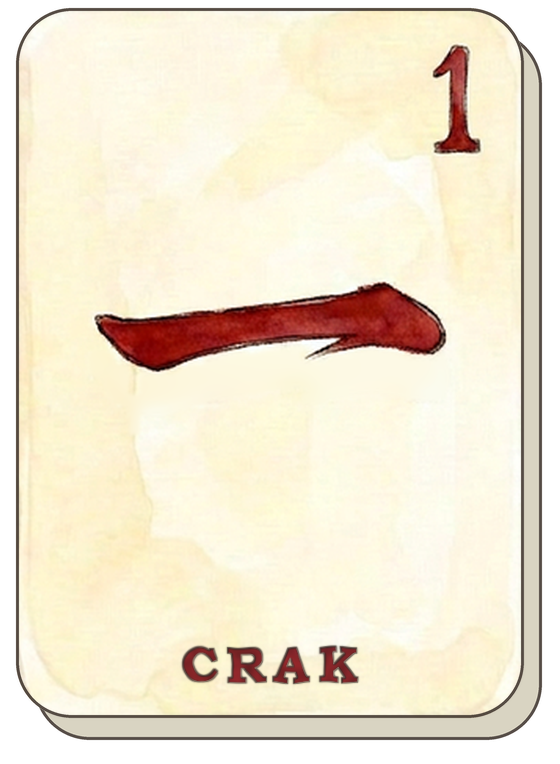
You just drew a Joker. Twelve of your thirteen tiles are already on one line, all in Bams. Where may the Joker sit on that line?
- With the two Two Bams, to make them three
- With the Six Bams or the Eight Bams, and nowhere else
- In any pile on the rack, pairs included
No answer here on purpose. Make your call on the site, write a line about why, and Prim answers you there. Your letter email is your key; no password, ever.
Make your callAnswer all seven before next Thursday and your name goes in the month’s pot, once for every set you finish. One reader is drawn each month for a Practice Workbook of her choice.
A Closing Note
It is the thirtieth letter, and the first full week of October, and Prim has spent it on the one skill nobody puts on the box.
You will spend a great deal of your mahjong life not winning. Everyone does. The tiles are the tiles, and some afternoons they simply do not love you. But the losing is not the part that defines you, and it never was. The part that defines you is the ten minutes after your hand has died, when the game is decided and the only thing left to play is yourself. Play it out. Play it with a straight back and a safe discard and a genuine word for whoever takes it home. The table is watching, the way it always is, and it is deciding, quietly, how glad it will be to see you next week.
Prim may write for the women at the table, but she firmly believes everyone is welcome. Everyone deserves a seat at this table.
Don’t tap it, rack it, double stack it. Do it to it, don’t construe it. We all know that Prim won’t skew it. The Order of the Tile, pursue it.
Until next week, may your rack be blessed and your Charleston ruthless.Prim, as always
Forward this to your favorite fourth.
Everyone deserves a seat at this table.
Prim Shows Her Work
Every name, number, and event in this letter, with the receipts.
Show the sourcesHide the sources
- If you cannot win, focus on preventing others from winning, never discard to a third exposure even if you break up a good hand, watch the discards, and you have reached the endgame when you worry more about discards than draws
- When you cannot win, switch to full defensive mode and do everything to keep others from winning, which is in no way unethical
- A player who realizes her hand is dead may not declare it herself, another player calls it from the exposures, and she should keep playing defensively to the end
- Tile Talk, an American Mahjong podcast begun in 2026 by Elizabeth, Christina and Marshall, on playing for money, the mental side of the game, and how you rank as a player
- Mahjong Loft, deeply engraved characters, hand painted bams and dragons, and consistent weight for a satisfying click on the mat; sets named Amber Tortoiseshell and Tiger’s Eye Marble
- Beginners Mahjong Weekend Retreat at the Garden Grove Inn, October 30 to November 1 2026, Union Pier Michigan, Lynn McDonald, ten hours of instruction, double occupancy $645 to $745
- Second Annual MAHJ-O-RAMA, October 11 2026, Johns Creek, Georgia, $70 with lunch
- The eleventh Mah Jongg World Championship, October 16 to 18 2026 at Paris Las Vegas, sold out to a waitlist
- Is the White Dragon really a zero
- What is a pung, a kong and a quint
- What is the courtesy pass