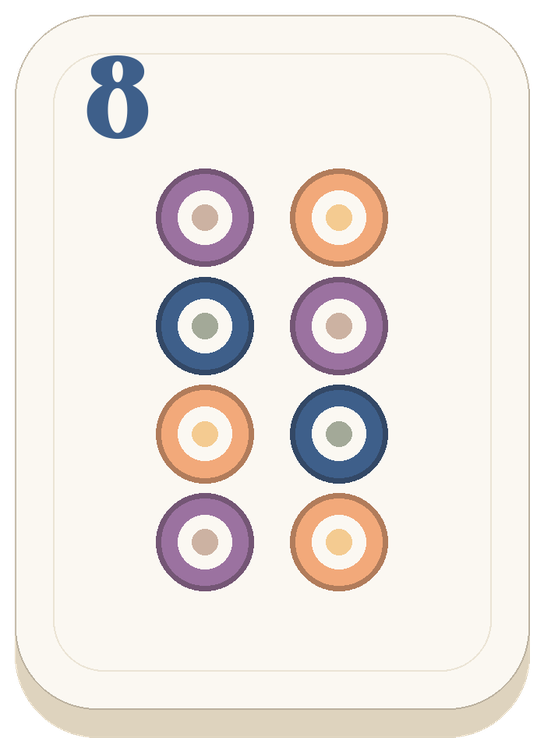
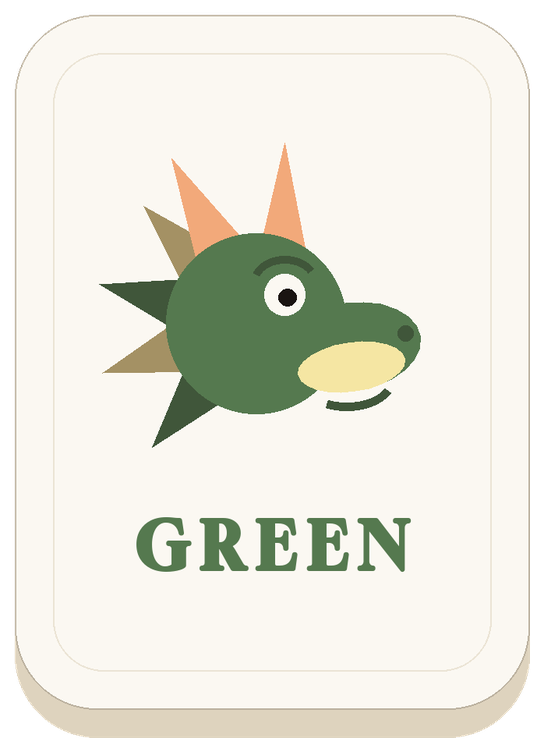
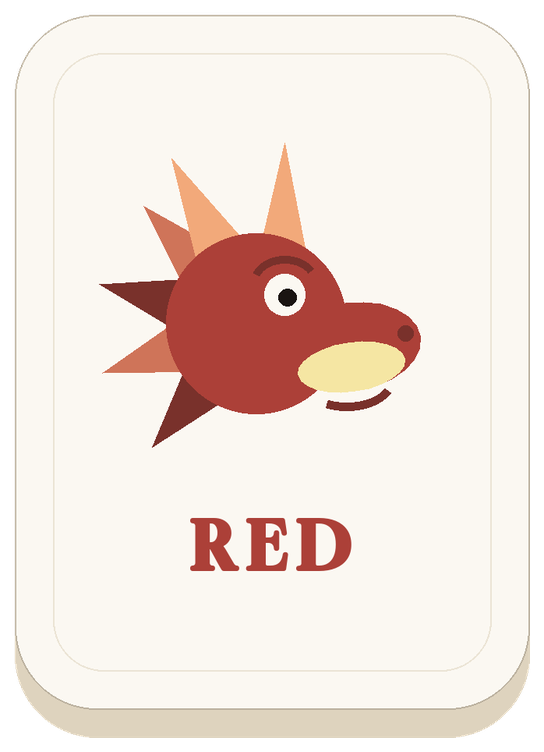
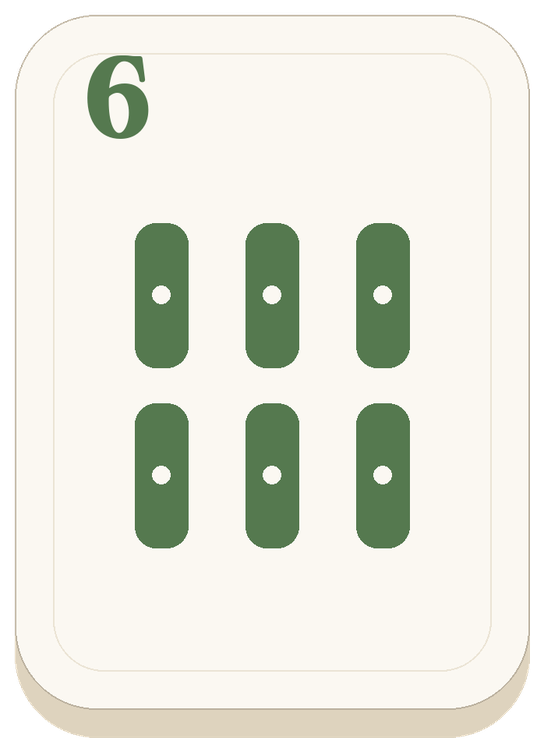
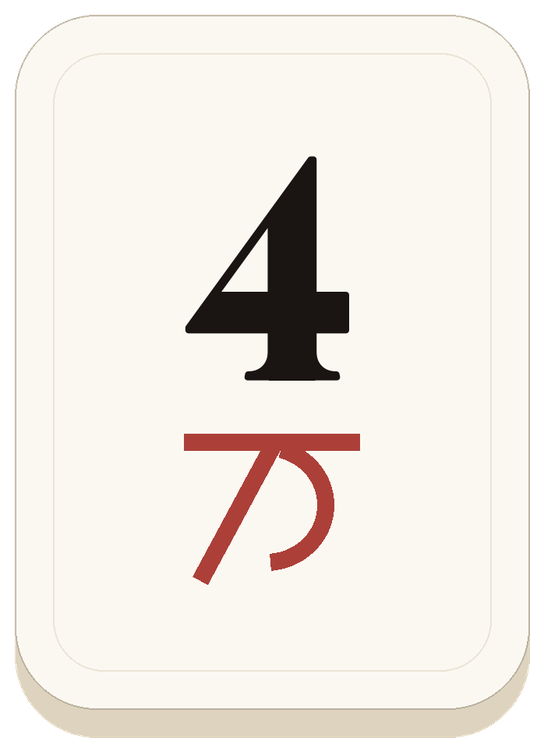
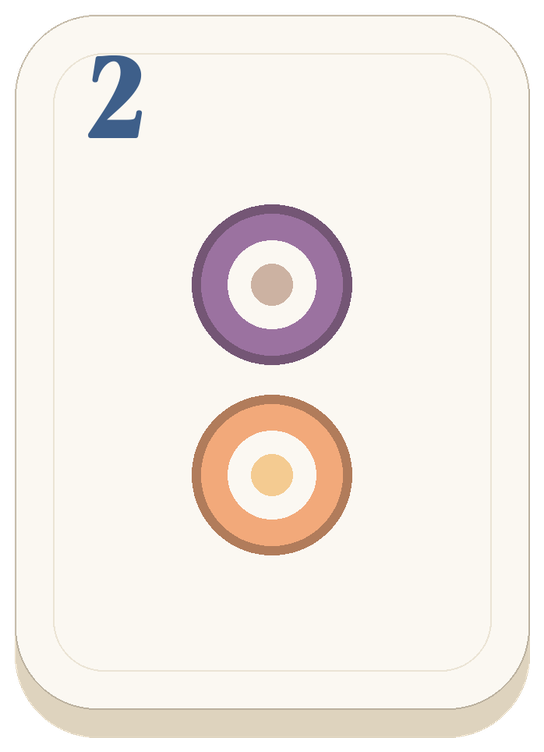
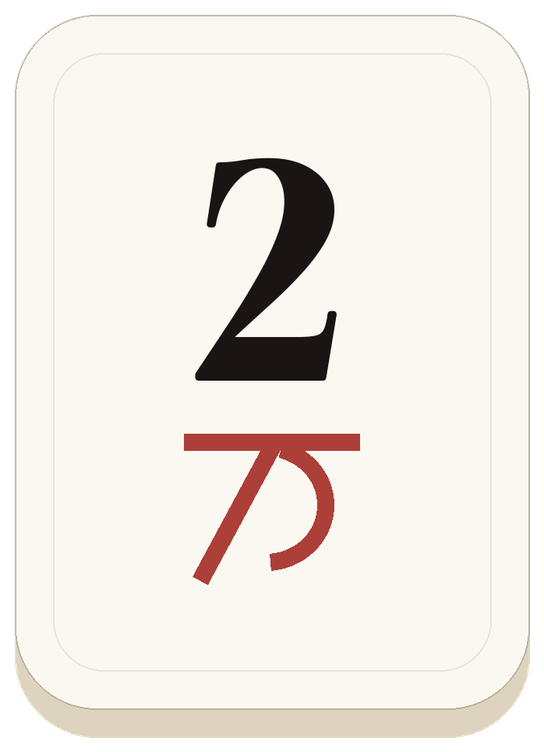
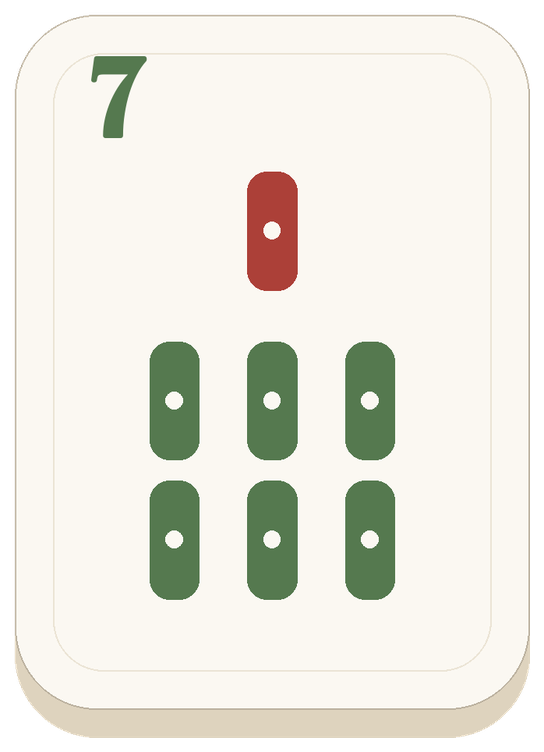
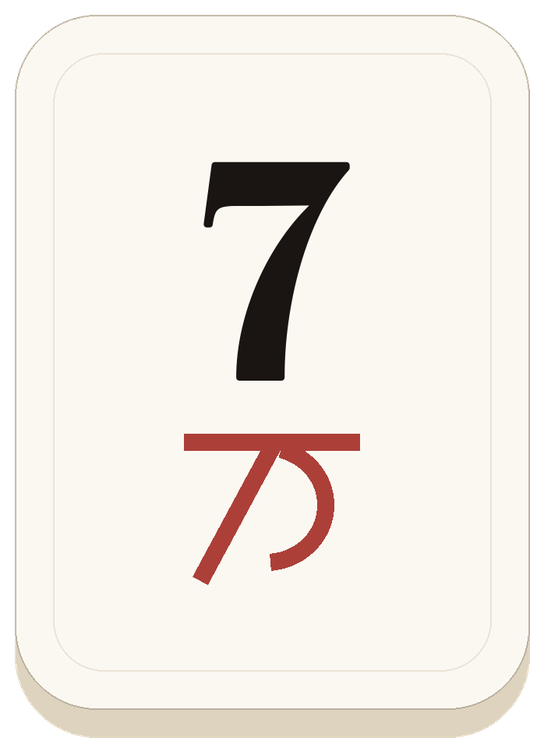
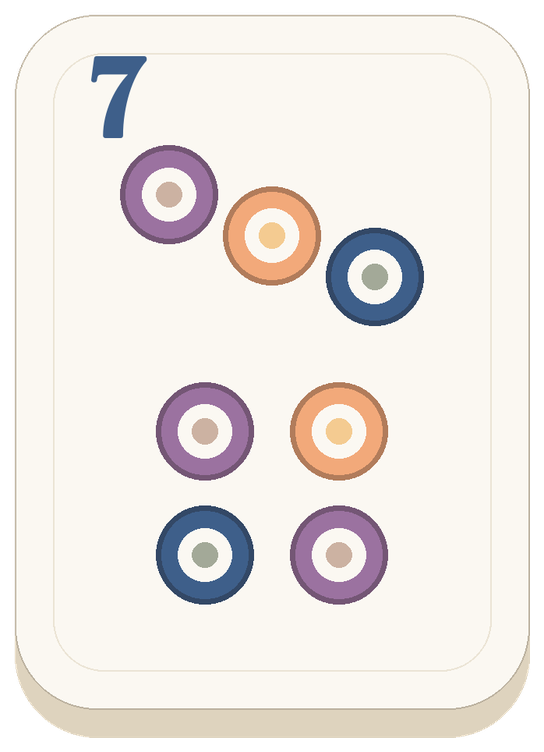
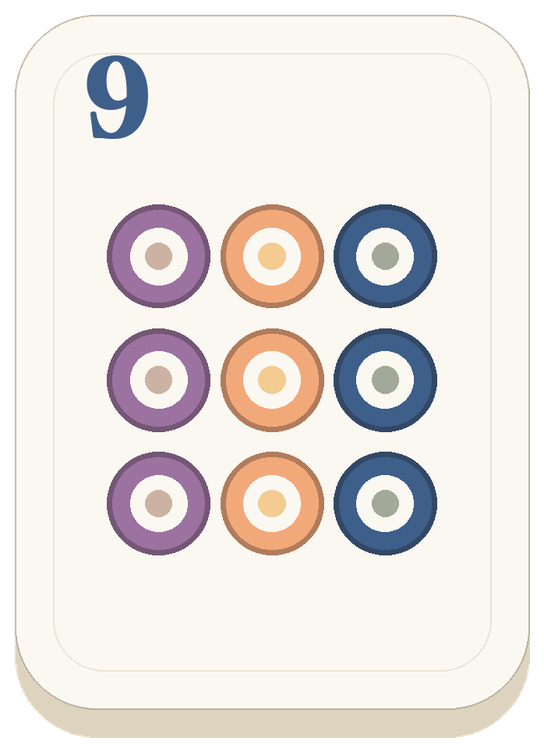
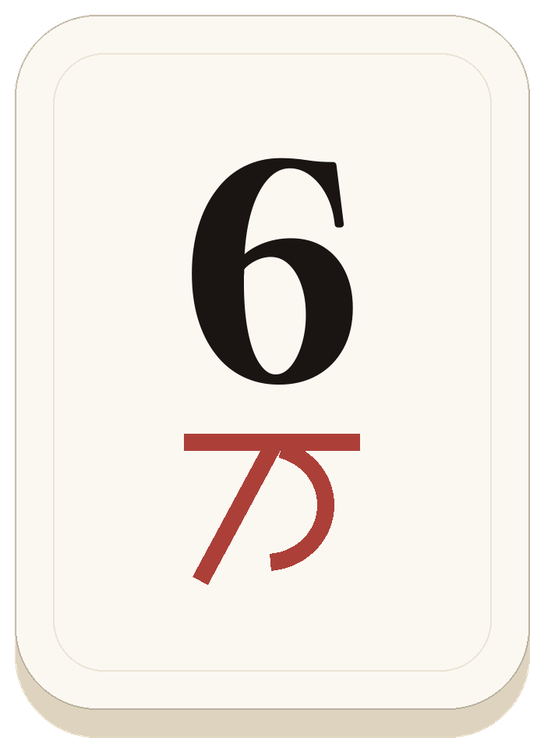
The first time you see a mahjong card, it looks like chaos, fifty-odd hands, colors everywhere, a thousand ways to win. Everyone feels that.
But a card is really just three layers: the sections (the map), the colors (which group the numbers by suit), and the solutions (the hands). See those three, and the chaos organizes itself.
What you're actually looking at
A card is sections down the side, each holding a few lines of real tiles, with points on the right. Here are a couple of lines, in actual tiles:
A card, up close
Even Numbers
25 pts ★
Winds & Dragons
30 pts ★
Complete 14-tile example hands, built to show the shape, not lifted from any published card. Press & hold any tile to enlarge it. Buy your card from the League.
★
Those numbers are points. They're how a hand is scored when players settle up at the end. Here's the secret most guides skip: plenty of tables don't keep score at all, and you never need points to play or to read the card. Scoring is its own lesson for another day, learn it whenever you're ready, or not at all.
1SectionsThe labeled groups down the card. They barely change year to year.
2ColorsWhich number groups share a suit, and which do not. Flowers and honors wear a color without having one.
3SolutionsThe lines inside each section. Every one is a hand that wins.
Layer 1The sections are your map
This is the part that holds still. The hands change every spring, but the sections barely do, so you learn them once. Most years you'll see:
Year Handsbuilt from this year's digits
2468the even numbers
Any Like Numbersone number, across suits
Quintsfive-of-a-kind hands
Consecutive Runnumber sequences
13579the odd numbers
Winds & Dragonsthe honor-tile hands
Singles & Pairsconcealed · no jokers
Layer 2The colors feel like nothing. They mean everything.
This is the layer that trips up every beginner. The colors look decorative, so people ignore them. That's the mistake. On the card, color does exactly one job:
Color = suit. Same color, same suit. Different color, a different suit.
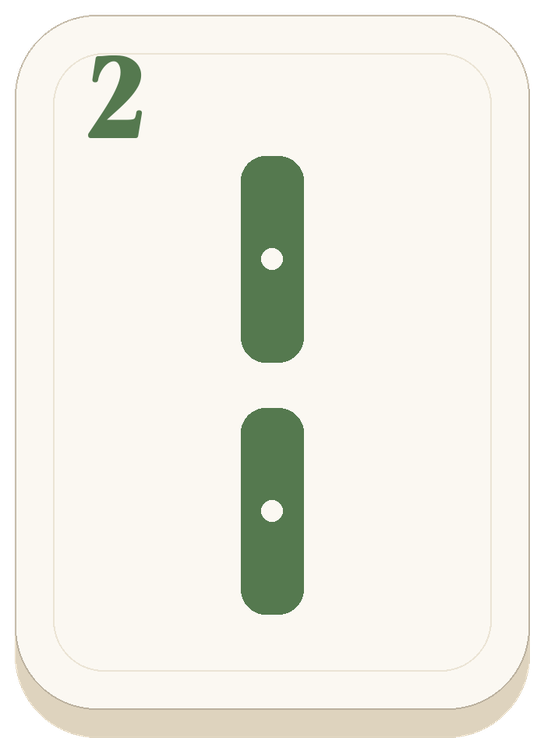
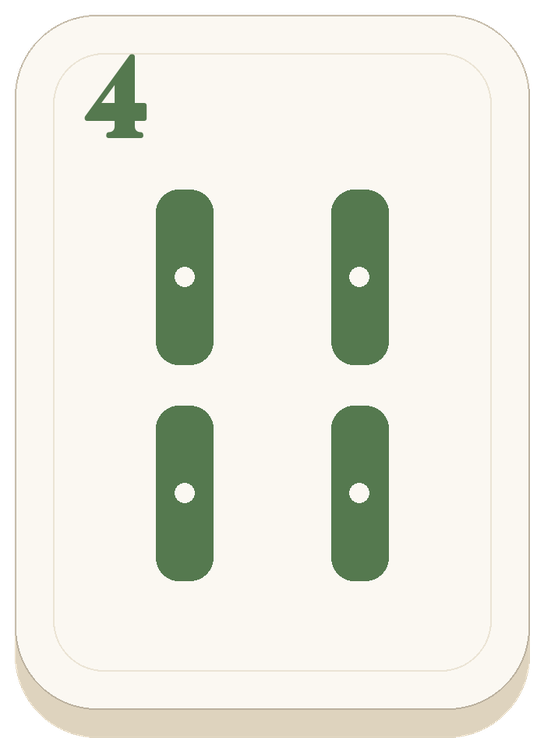
66Two greens, so the same suit. This is a pair of 6 Bams.
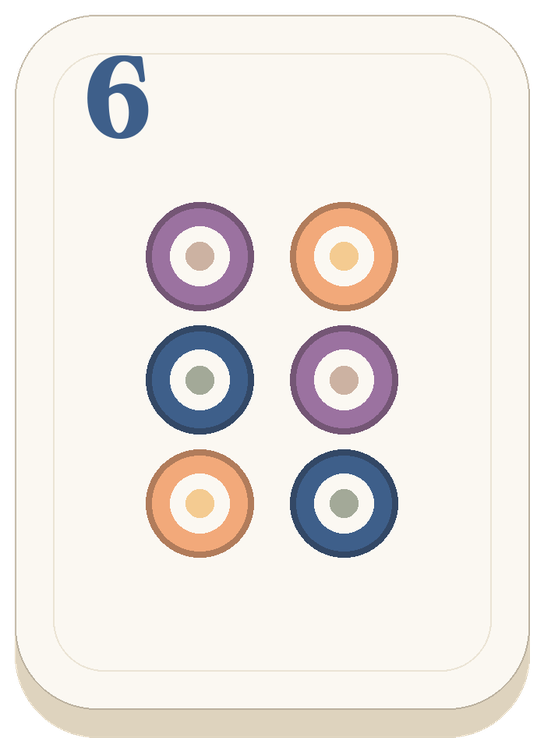
66A green and a blue, so two different suits. One 6 Bam, one 6 Dot.
The card never tells you which suit to play, only which parts must match and which must differ. Pick whatever suits you're drawing, as long as the color pattern holds.
One thing to know before you start counting colors. That rule is about the numbers. Flowers, winds and dragons are printed in a color too, and they do not have a suit, so their color is never telling you one. Look at the first line below: the flowers print green beside a group of green Bams, and they are still just flowers. A line can show three colors and take only two suits, which is why counting the colors is not the same as counting the suits.
Then come the words
Here's the other half of the confusion. Beside many hands sit small instructions in words, and they override what the colors seem to say. The handful you'll meet again and again:
Any 1 SuitThe whole hand is one color. You pick which suit.
4 4 4
Any 2 SuitsUse two of the three suits, your choice which two.
2 22 2
Any 3 SuitsUse all three suits, one to each colored group.
7 77 77 7
Like NumbersThe same number, one in each suit shown.
111
Matching DragonThe dragon takes its suit's color: green with Bams, red with Craks, soap with Dots.
2 2D D
Any DragonThe dragon can be any color. It does not have to match the numbers.
9 9D D
The one that trips everyone: a hand that says "any 3 suits, any dragon" does not lock the dragon to a suit. It means use all three suits and a dragon of any color, one that happens to match a suit is fine too. "Any dragon" literally means any. When the words and the colors seem to disagree, the words win, so read them every time.
See it on a line
You have to read the tiles and the words together. Two made-up lines to show how:
A line, the way it prints on the card
FF246824682468(Any 3 Suits)
↓ which is these tiles
Another line, watch the dragon
FF24682468DDDD(Any 2 Suits, Any Dragon)
↓ “any dragon” means literally any: these could be red, green, or soap and all are legal, matching a suit or not, your call
How one line reads
Take one line apart and it's just named groups of tiles. Each group is a single, pair, pung, kong, or quint, the real vocabulary players use, and worth learning. Watch the color change as you read across:
Pair · Flowerstwo tiles
Pung · 2 Bamsthree, green
Pung · 4 Bamsstill green
Pung · 6 Dotscolor flips to blue
Pung · 8 Dotsstill blue
25 ★
Pointsoptional
The same even-numbers hand from up top, taken apart. Watch the color flip at the 6, that's the suit changing from Bams to Dots.
Layer 3The solutions, and why there are so many
Inside each section sits a stack of lines like the ones above. Each is a solution, a complete hand that wins, with its point value on the right and sometimes a C for a concealed hand.
Here's the number that scares people: a card carries around fifty hands, and once you count every color and suit variation each one allows, you're past a thousand ways to win.
So don't read all of it. Nobody does. You read the one section your tiles are drifting toward, glance down its handful of lines, and pick the one you're closest to. The card isn't a test you memorize, it's a menu you scan.
🀄
Now try it for real
The card sticks when you play it
Reading about the card only gets you so far. A couple of our games are free with a quick sign-in, no Game Pass needed, and they build the habit fast.
Put the three layers together and reading a card becomes a calm little routine:
1
Find the sectionLook at the tiles you're collecting and jump to the section they fit, evens, odds, a run, winds and dragons.
2
Read the colorsOn the lines there, see which groups share a color and which differ. That's which suits to keep together and which to split.
3
Pick a lineChoose the solution you're closest to. Note its points, and whether it's concealed.
4
Stay looseYour tiles can still become several hands. Keep two or three in mind and commit late. That's the whole art.
"The single most important skill in American Mahjong is reading the card. New players spend their first ten hands memorizing rules. They should be learning to read the card."
Prim, American Mahjong Learning Guide
Your one-glance cheat sheet
Screenshot this. It's the whole shorthand in one look.
The tiles · color tells you the suit
Bamsgreen
Craksred
Dotsblue
WindsN E W S
Dragonsred, green, soap
Flower & Jokerno suit
The groups · how many alike
Pair2 alike
Pung3 alike
Kong4 alike
Quint5 alike
Same color, same suit, for the numbers. Flowers, winds and dragons are printed in a color too and have no suit at all, so never count them when you are working out how many suits a line takes. Jokers go only in a pung, kong, or quint, never a single or a pair. A hand marked C is concealed. Everyone plays the current year's card.
✦ Prim's Own
Want the whole game, not just the card?
This guide is carved from Prim's American Mahjong Learning Guide, the complete book: the tiles, the Charleston, jokers, scoring, etiquette, and the full story of the game, taught the way it's taught at a kitchen table.
Color is suit, and only suit. Same color = same suit; a different color = a different suit. The card asks you to match its pattern, not to use any particular suit. It's the single biggest step to reading fluently.
What are the sections on the card?
Labeled groups of similar hands, 2468, Consecutive Run, 13579, Winds & Dragons, Singles & Pairs, plus this year's Year hands. They stay largely the same year to year, so they're the stable map you learn once.
Why are there so many hands?
Around fifty hands, and past a thousand once you count every color and suit variation. You're not meant to memorize them, you scan the one section your tiles point to and read a few lines.
What do the letters mean?
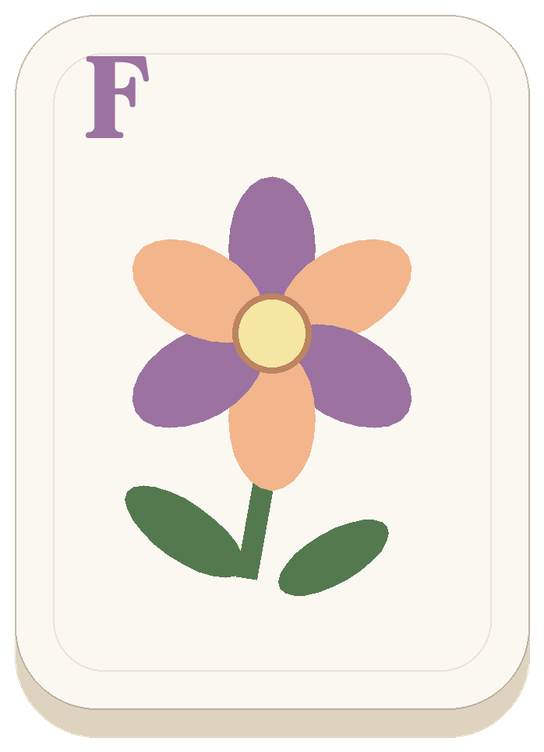
N, E, W, S are the Winds, D is a Dragon, F is a Flower, and digits are numbered tiles. Repeats tell you how many of each you need.
Can a joker be used for any tile?
Only inside a group of three or more (pung, kong, quint, sextet). Never for a single, a pair, or a run.
Does the card change every year?
Yes, a new one every spring with different hands, though the sections hold steady. Always play the current card, and make sure your whole table is on the same one.
The Order of the Tile™ is not affiliated with the National Mah Jongg League. This is an independent teaching guide, written with respect for the League and the players. The tiles shown are Order of the Tile's own Invitation set, and every hand shown is an original teaching example; this guide explains how to read a card and does not reproduce the NMJL card or its hands. Buy your card from the League.