The Exposure™
Six modules that carry you from your first night at the table to league night. Every lesson teaches a skill, then drills it in a real game, and a full year of the Game Pass comes with it.
Start here
Everyone starts in the same place, and nobody learns it all in one night. Take these in order, an evening at a time, and by the last one you will have a table of your own.
1
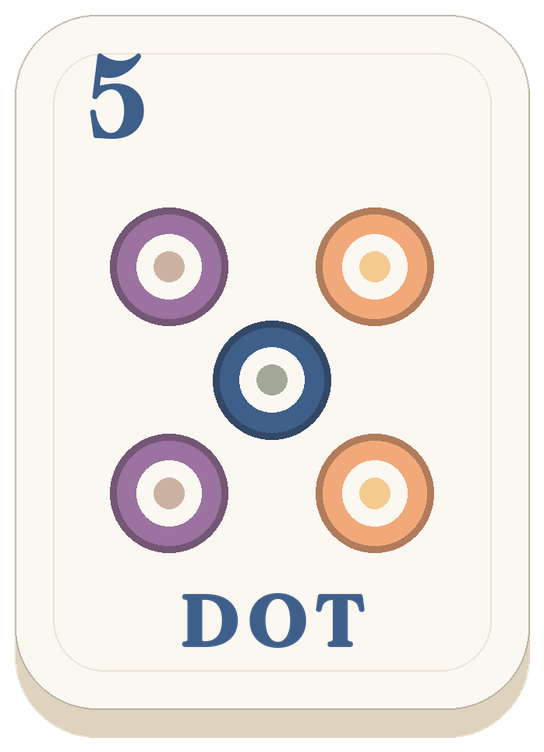
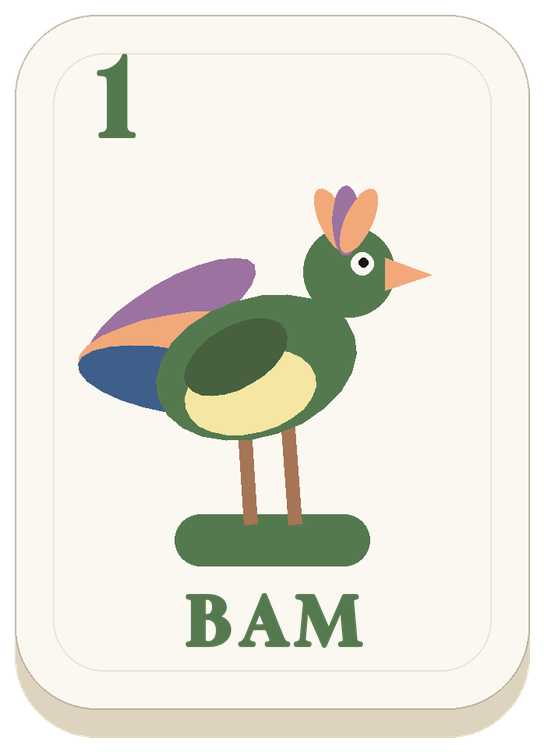
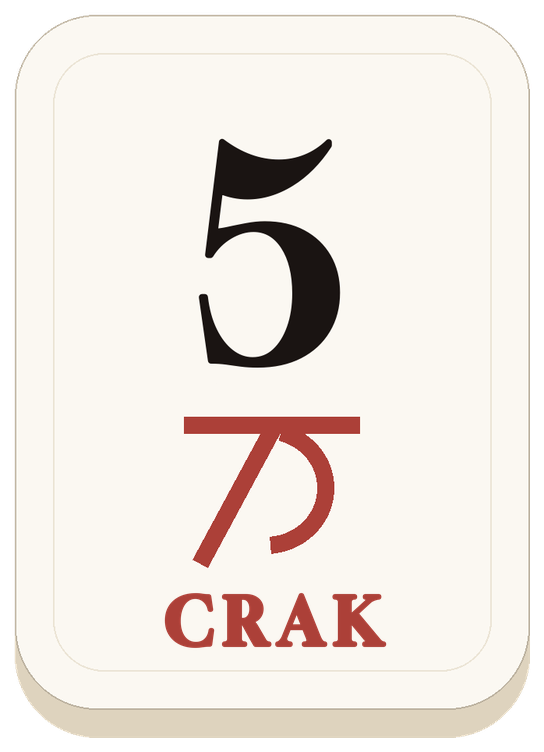
An American set holds 152 tiles: Bams, Craks and Dots from one to nine, then Winds, Dragons, eight Flowers and eight Jokers. Learn to name them first, because every tile you discard is named out loud.
What is in the set
2
The National Mah Jongg League publishes a new card every April, and only hands printed on the current card can win. Order this year's straight from the League. Most tables give every player their own card.
Order from the League
3
Each line on the card is one winning hand. The colors say how many suits a line uses, never which ones, and the X or C at the end says whether you may call discards to build it. The Card Decoder walks the whole card in about ten minutes.
Open the Card Decoder
4
Each player builds a wall two tiles high and nineteen stacks long. East breaks it and the deal leaves East with fourteen tiles and everyone else with thirteen. Then play moves to the right, which from above is counterclockwise.
Build the wall and deal
5
Before the first discard, everyone passes three tiles right, then across, then left. A second Charleston and a courtesy pass are optional. It is your first real decision of the hand, and the one rule never to forget is that a Joker may not be passed.
How the Charleston works
6
The flow only sticks once your hands have done it. The Table Solo deals you a full game whenever you like, with the house in the other three seats, and practicing the opening on your own builds the habit fastest.
Play at the table
7
Once the rules run on their own, the game turns into choices: which hand to chase, which tile to let go, and when to stop chasing and play defense. New players do best committing to one hand and letting the table tell them when to move.
Choosing a hand
8
Mahjong is a game for four, and the table is half the fun. Find a teacher, a class or an open game near you, and settle your house rules before the first wall goes up.
Find a table near youGo deeper
Six modules that carry you from your first night at the table to league night. Every lesson teaches a skill, then drills it in a real game, and a full year of the Game Pass comes with it.
Free reference
No ceremony required. Read these any time, link to them, share them with your table.
Live · Free
The rules of American Mahjong, one rule at a time, each with its own ID. The Charleston, calling, Jokers, dead hands, misnamed tiles, scoring.
Open the Rules
Live · Free
Every word you will hear at the table, organized by where you will hear it. Tiles, the Charleston, jokers, the card, winning and losing.
Open the Glossary
Live · Free
The questions Prim hears most. House rules, joker etiquette, what to do when something goes sideways at the table.
Open the FAQ
Live · Free
A year-by-year reference archive of the NMJL card from 1937 to today. Milestones, rule shifts, structural notes per era.
Open the Archive
Live · Free
Real questions from real tables, each answered on its own page. What a dead hand is, when to expose your Jokers, what the letters on the card mean. A new one most days.
Take it home
The Learning Guide, the Card Decoder, line finders, score cards, and Prim's printables. One place to browse them and take them home.
Visit the shop →
Questions
Start with the tiles, then get this year's NMJL card and learn to read it. After that, set up a table, learn the Charleston and play a few games before you worry about strategy. The eight steps on this page go in exactly that order.
Not as hard as the tiles make it look. You can pick up the basic flow, Charleston, draw, discard, call, declare Mahjong, in a single afternoon. What takes longer is reading the NMJL card fluently and sharpening your strategy, and that is the part players happily fuss over for years. If you can play gin rummy, you can play American Mahjong. The symbols look intimidating for about twenty minutes, and then they do not.
Four things: an American Mahjong set (152 tiles, including 8 jokers and 8 flowers), the current year's NMJL card, four racks, pushers make life easier but are not required, and three other players. That is the whole list. You do not need a special table or a timer. Most new groups share one set and give everyone their own card.
Each line on the card is one winning hand. The card is organized into families: year hands, the even-number 2468 family, consecutive runs, the odd-number 13579 family, winds and dragons, and singles and pairs. The colors say how many suits a line uses, never which ones, and the X or C at the end of a line says whether you may call discards to build it. Prim's Card Decoder walks the card section by section in about ten minutes.
Yes. At The Order of the Tile you can play right in your browser. The Table Solo gives you a full game any time, with the house in the other seats, and The Table Live seats up to four friends at one table, with video. Every answer, the Rules, the Glossary and the Card Decoder are free to read.
Be a Favorite Fourth
Every new lesson, every product launch, every course opening. Prim tells subscribers first, always. Read by email or listen on the podcast. Free either way.
Join the Table